
 Philippines
 Vietnam
 Bali, Indonesia
 Malaysia
 Dubai, UAE
 India
India
On 2.1% of mobile pages in the HTTP Archive's 2024 crawl, JavaScript changed the canonical tag after the page loaded. The raw HTML named one original URL and the rendered page another. A browser shows you only the second. A technical SEO compares both, and that is most of the job.
What does a technical SEO freelancer do?
A technical SEO freelancer makes sure search engines can reach, render and understand the pages you want ranked. The work sits below the content: server responses, robots rules, canonical tags, JavaScript output, page speed, structured data and internal links. Most of it ends as tickets for your developers, so a good freelancer writes fixes a developer can ship.
The HTTP Archive Web Almanac 2024 SEO chapter shows how common the basic signals are, and how often they break:
- robots.txt: 7.40% of mobile pages failed Lighthouse's check for a valid robots.txt file.
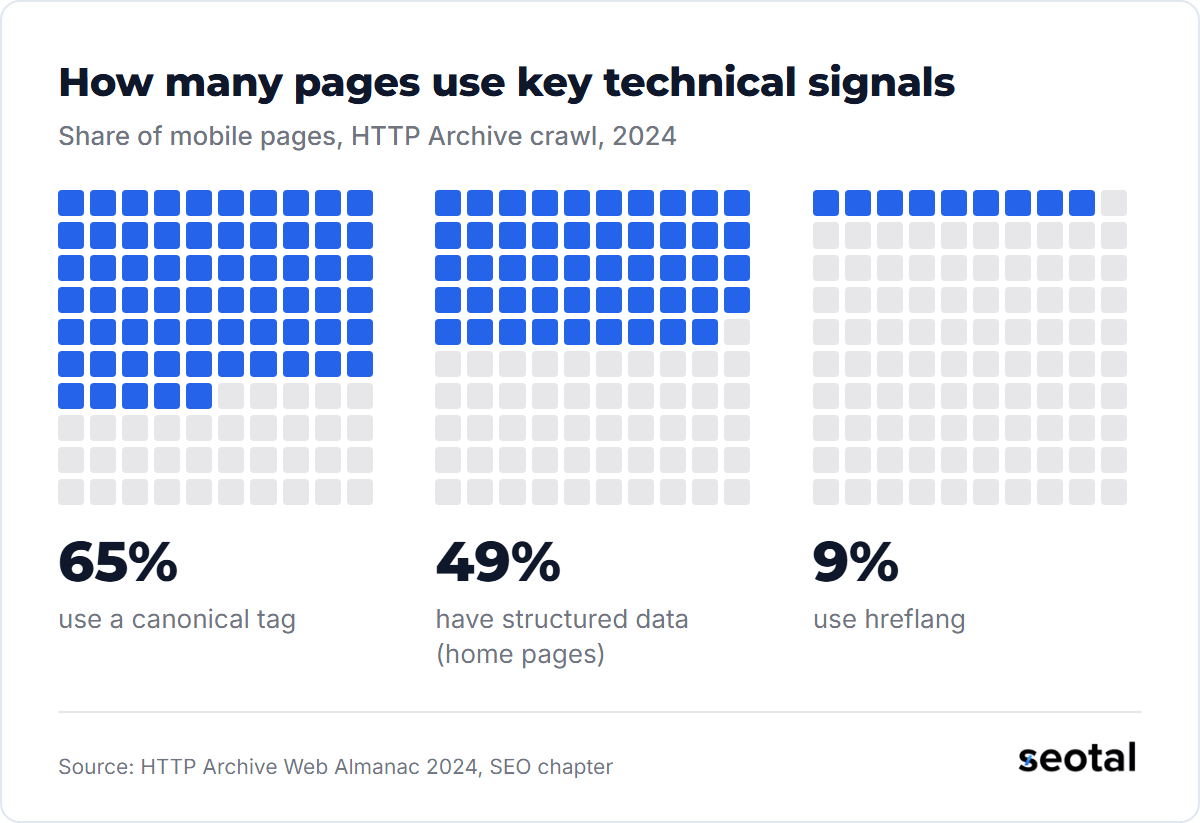
- Canonical tags: 65% of mobile pages use one, and 0.8% send conflicting canonicals in the HTML and the HTTP header.
- Rendering: on the median mobile home page, the visible word count differs by 13.6% between the raw HTML and the rendered page.
- Internal links: the median page carries 41 internal links.
The scope in a typical engagement covers eight areas: crawling and indexing, JavaScript rendering, Core Web Vitals, site migrations, structured data, log files, internal linking and hreflang. Few freelancers are strong in all eight. Ask which three they would call their best, then check that those match your site's problem.
Which technical SEO tasks need a specialist?
A task needs a specialist when a mistake removes pages from Google, and a generalist can handle the rest. Titles, XML sitemaps, redirects for a few URLs and a basic Organization schema are generalist work. JavaScript rendering, migrations, hreflang and log analysis are not.
- Titles, meta descriptions and headings
- XML sitemap and a short robots.txt
- A few redirects after a page merge
- Basic schema from a plugin
- Search Console coverage checks
- JavaScript frameworks and rendering
- Domain or platform migrations
- Server log analysis on large sites
- hreflang across several markets
- Core Web Vitals fixes in code
JavaScript rendering
Google renders JavaScript pages in a separate step between crawling and indexing. Its JavaScript SEO basics page says a page may wait in the render queue "for a few seconds, but it can take longer than that". Google still calls server-side or pre-rendering "a great idea", because not all bots can run JavaScript.
Our comparison of Nuxt.js, Next.js and Astro for SEO covers how each framework renders by default.
Crawl budget and log files
Most sites can skip crawl budget work. Google wrote its guide to managing crawl budget for sites with 1 million+ unique pages that change weekly, or 10,000+ pages that change daily. Below that, Google says an up-to-date sitemap and a regular look at the Page Indexing report are enough.
Server log analysis earns its fee on those large sites. A freelancer who pitches log analysis to a 200-page brochure site is selling hours you do not need.
hreflang
Only 9% of mobile pages use hreflang, and one missing return tag breaks it. Google's page on localized versions says each language version "must list itself as well as all other language versions". If two pages don't point to each other, Google ignores the tags. On a site with six markets, each page carries six tags, and each one must match its partner page.
Core Web Vitals work
Google's targets are an LCP within 2.5 seconds, an INP under 200 milliseconds and a CLS under 0.1, per its Core Web Vitals page. Mobile LCP is where most sites fail. In the Web Almanac 2024 performance chapter, 59% of mobile sites had a good LCP and 74% a good INP.
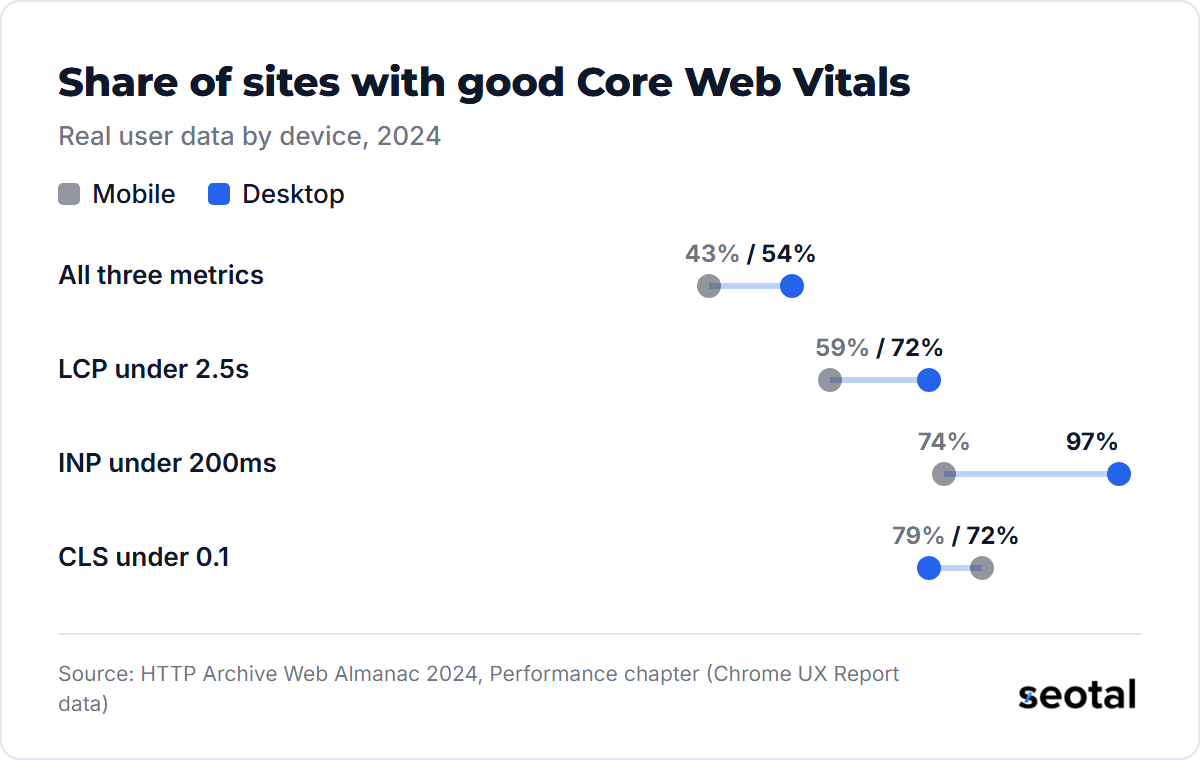
These scores come from real Chrome users, not lab tests. A freelancer who shows you a Lighthouse score of 98 has not proved a pass. Ask for the field data from the Chrome UX Report or the Search Console Core Web Vitals report, by page group.
Speed work splits into two jobs. Finding the cause (a hero image loaded late, a third-party script blocking input) is SEO work. Fixing it is often front-end work. If your freelancer cannot write code, budget developer hours too. The SEO and AEO principles for front-end developers list the fixes your developers will own.
Site migrations
A migration is the riskiest single project in technical SEO, and the one where a specialist pays for itself. Google's page on site moves with URL changes, updated in August 2026, tells owners to "expect temporary fluctuation in site ranking during the move". For a medium-sized site, it can take "a few weeks or more" before Google shows the new URLs.
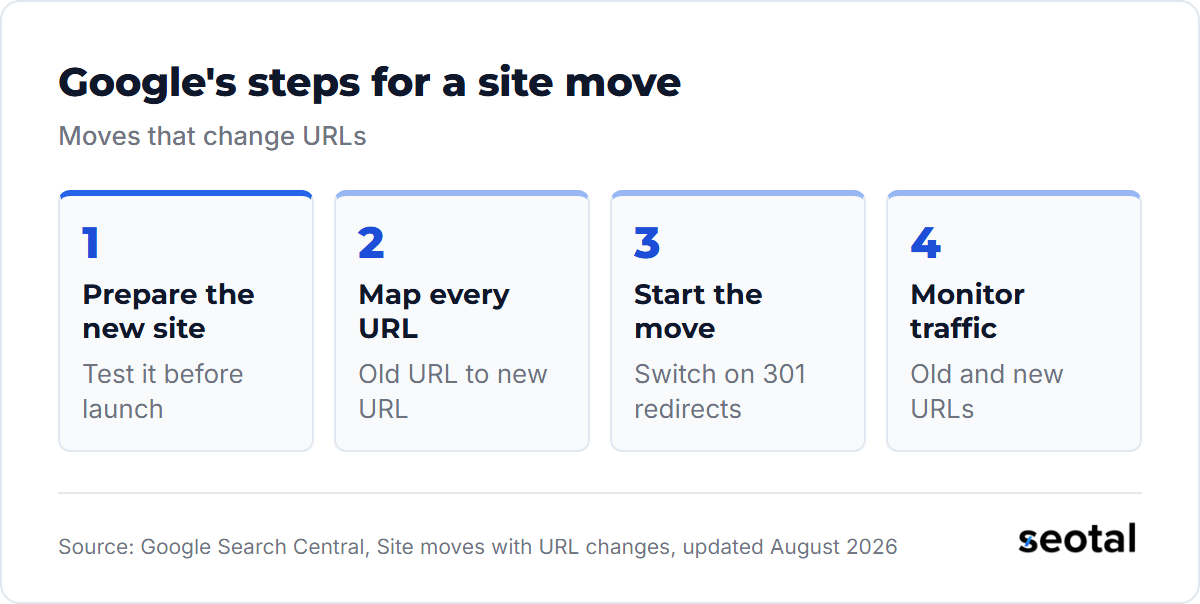
The URL map is the deliverable to pay for. It lists each old URL, its new home and the redirect type. Missing rows turn into 404s after launch, and each one loses the links that pointed to it.
How much does a technical SEO freelancer cost?
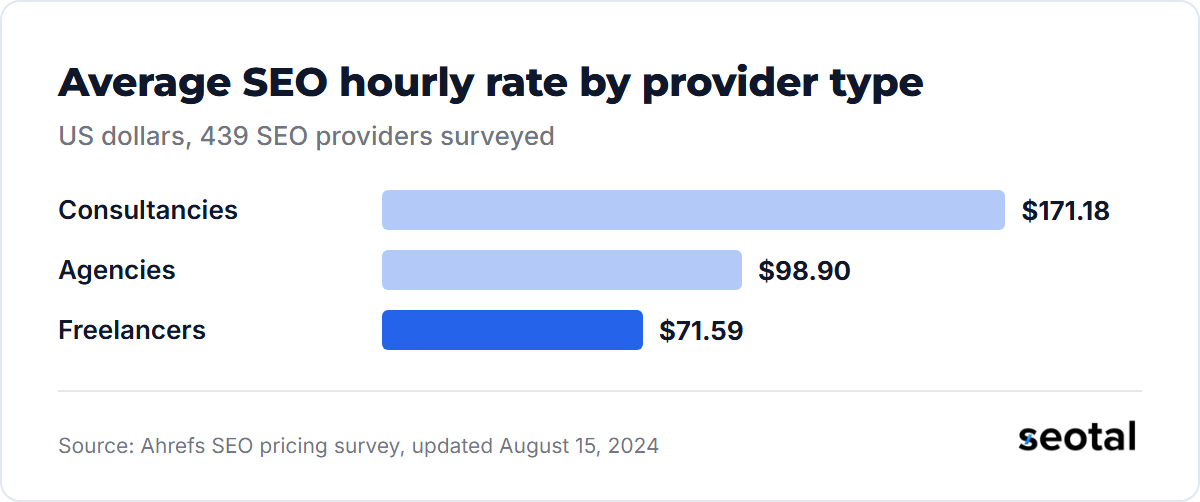
Freelance SEOs charge $71.59 an hour on average, against $98.90 for agencies and $171.18 for consultancies. These figures come from the Ahrefs SEO pricing survey of 439 providers, updated August 15, 2024. The survey did not split out technical SEO, so read them as SEO rates in general. Specialist work such as a migration tends to sit at the upper end.
Project fees
Technical work is often sold per project: an audit, a migration or a speed fix. In the same survey, 48.9% of providers charge per project. The most common freelance project fee was $101 to $250, while agencies most often charged $2,501 to $5,000.
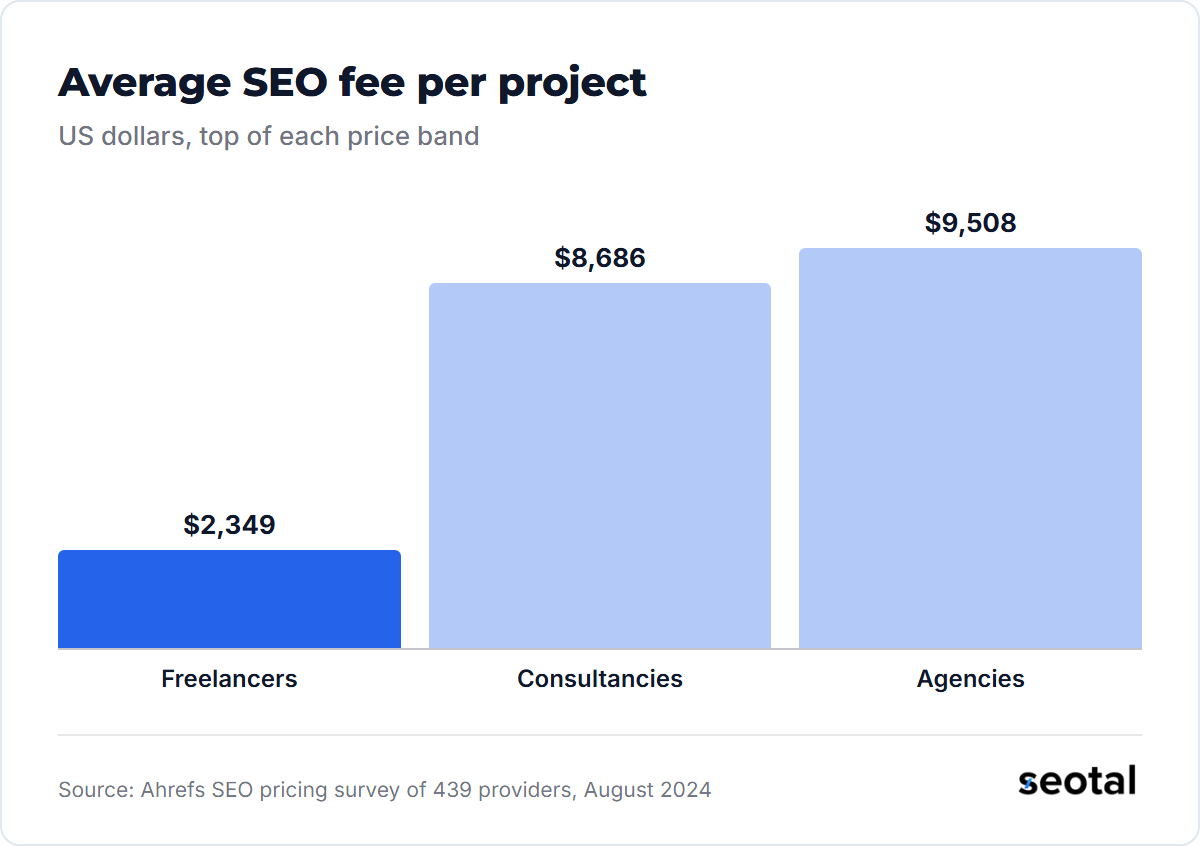
Ahrefs worked out those averages by assuming each respondent charged the top of its price band, so treat them as ceilings. A $101 to $250 project buys a quick check of a small site. A full audit of a site with thousands of URLs, or a migration, belongs in the four-figure range.
Tools the freelancer brings
A technical audit needs a crawler. Screaming Frog's SEO Spider is free up to 500 URLs; past that, a licence costs $279 per user per year. Ask whether tool costs are in the quote or billed on top. Crawl data should come to you as files, so the next freelancer does not pay to crawl again.
For hourly rates by country, including freelancers in Asia, see our table of SEO freelancer rates.
How do you test a technical SEO freelancer?
Give candidates the same small, paid task on your own site and compare the answers. Technical SEO is easy to test because the answers are checkable. Four questions sort candidates fast:
| Test question | A strong answer includes |
|---|---|
A page has noindex and is blocked in robots.txt. Will it leave the index? | No: Google cannot crawl it to see the noindex. Unblock it first. |
| The raw HTML and rendered HTML show different canonicals. Which counts? | Explains the risk, checks the URL Inspection tool and fixes it at the source |
| Our LCP is slow on mobile only. Where do you start? | Field data by page group, then the LCP element and what delays it |
| Walk me through a migration you ran. | A URL map, redirect testing and what happened to traffic after launch |
A page carries a noindex tag but robots.txt blocks it. Will Google drop it from the index?
Then ask for one real deliverable: a past audit with the client's name removed. A good audit ranks issues by impact and says who fixes each one. A 90-page export from a crawler with no priorities is a tool report, not an audit.
For the wider interview process and the questions Google suggests you ask any SEO, use our guide on how to hire an SEO specialist.
Red flags in a technical SEO pitch
A promise of rich results is the first flag. Google's structured data guidelines are plain about it:
"Google does not guarantee that your structured data will show up in search results, even if your page is marked up correctly." Google Search Central, General structured data guidelines
Other signs to walk away:
- An audit priced before they have seen the site. Scope depends on URL count and platform.
- A PageSpeed score as the only goal. Lab scores are not the field data Google reports.
- Crawl budget work on a small site. Google's own threshold starts at about 10,000 fast-changing pages.
- No access plan. They should ask for Search Console, analytics and a staging server, not your hosting password on day one.
- Fixes with no owner. Every item in the audit should name who ships it: you, your developer or them.
If you want to compare profiles, our ranking of the ten types of technical SEO expert to hire shows where each kind fits.
Hire a technical SEO freelancer through Seotal
Seotal is not an agency: we match you with a vetted freelance SEO specialist from Asia, including technical SEO specialists in India, Vietnam and the Philippines. You pay $15 to $30 an hour with no minimum, or a part-time retainer of $1,000 to $2,000 a month for 60 to 80 hours, with a 3-month minimum. There are no platform fees, and we replace the match during the first 30 days if it is not right.
I would start a technical engagement with an hourly audit, then move to a retainer once the fix list is clear. The how it works page shows the matching steps, and pricing has the full plan list.
Frequently asked questions
What does an in-house technical SEO specialist earn?
US government data has no technical SEO category. O*NET groups the role under Search Marketing Strategists, whose median pay was $78,760 a year, or $37.87 an hour, in 2025. Benefits come on top of that.
Can a web developer do technical SEO instead?
A developer can ship most fixes, but may not know what to fix. Rendering, speed and redirects are code. Deciding which pages to index, canonicalize or merge is SEO judgement, so many teams pair a freelancer with their own developer.

 Freelance SEO Consultant: Rates, Services and How to Hire
  Top 10 Technical SEO Experts to Hire in 2026
 ![Freelance SEO Hourly Rates in Vietnam [Sep, 2026]](/assets/blog/vietnam-freelance-seo-rates-cover.png) Freelance SEO Hourly Rates in Vietnam [Sep, 2026]
Freelance SEO Hourly Rates in Vietnam [Sep, 2026]